Innovation and entrepreneurship require big ideas—but that is only part of the story. To truly drive value, you must embrace uncertainty. This article shows the role of academia in developing lasting ventures and how you can benefit from intriguing scholarship opportunities to invest in your education.
Big ideas are not the whole story
Building something new rarely means traveling in a straight line. Whether it happens in a startup venture or inside an established organization, progress is shaped by uncertainty, incomplete information, and a constant need to adapt.
The popular narrative attempts to address these issues by lionizing ‘‘big ideas,’’ but the truth is that ideas are only part of the story. To create change that brings lasting value, you must also be flexible and ready for lifelong learning. The first version of an idea is often not the final version. This is true whether you are an entrepreneur, an innovative corporate leader, or someone young with big ambitions.
Learning to work with uncertainty is key to driving value
Over the years, I have worked closely with entrepreneurs, corporate innovators, and students from around the world. And I have noticed that progress depends less on brilliance and more on how people learn and grow together along the way and, as a result, tap into each other’s collective intelligence. Those who move forward effectively are not the ones who avoid uncertainty, but the ones who learn how to work with it while leveraging the brainpower of everyone involved in the process
Learning when to turn ideas into action is not automatic. In unpredictable times, it is even harder. After all, acting without reflection is expensive. Yet waiting for clarity that never arrives is equally costly. The challenge is to learn how to move forward while still questioning your assumptions. Some people might call it design thinking.
This challenge looks remarkably similar across the smallest startups and the biggest corporations.
Entrepreneurship and innovation are closely connected
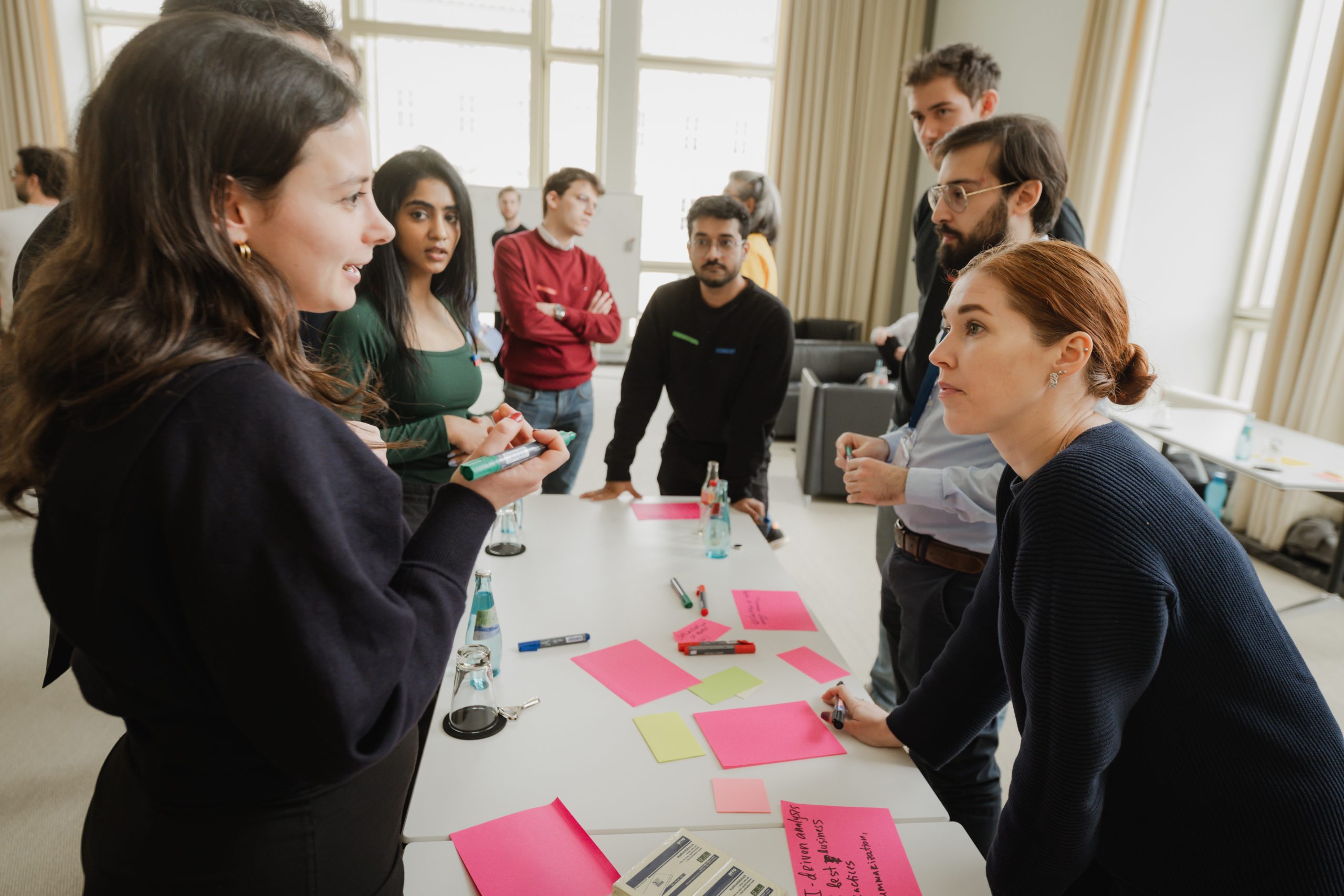
Startup entrepreneurs face resource constraints, market ambiguity, and personal risk. Corporate innovators navigate organizational complexity, internal alignment, and legacy systems. Different pressures, but the same underlying task: turning a new idea into something tangible that can be sustained in a way that drives value at the right time for the right customer segment.
This is why entrepreneurship and corporate innovation are not separate abilities. They are closely interconnected variations of the same skillset. Many founders collaborate with corporations as customers or partners. Many corporate innovators use entrepreneurial methods to explore new business models. Careers move between these worlds more often than we like to admit.
What matters is not the label, but the ability to create value under uncertainty.
Berlin is a city built on innovative thinking
This distinction is especially important in a city like Berlin, where change is a constant backdrop. It is a city where startups and global companies coexist, where creative industries intersect with technology, and where ideas are constantly tested in the market. It’s a place with huge opportunities to walk hand-in-hand with uncertainty. And it’s a place where the right idea can snowball into major growth – but only if there is a flexible framework in place to help shape its path.
Being embedded in such an environment means truly learning to embrace change. Success requires an understanding of how ecosystems shape innovation, and how networks, institutions, and culture influence what entrepreneurship can make possible.
Putting theory into practice
So, what does this mean in practice? It means learning how to frame problems clearly before jumping to solutions. It means testing ideas early, not to confirm what you already believe, but to discover what you do not yet see. It means learning when to persist and when to adjust to the course. And eventually, it means understanding how implementation works, how decisions are made, how resources are allocated, and how ideas survive and thrive once the excitement of novelty fades.
Implementation is where many innovation and entrepreneurship efforts struggle. The early stages are energizing. Later stages demand discipline, coordination, and patience. This is often where the gap between intention and impact becomes visible. Long-lasting value can only happen with continuous commitment to flexibility and learning.
How ESMT helps its students turn ideas into implementation
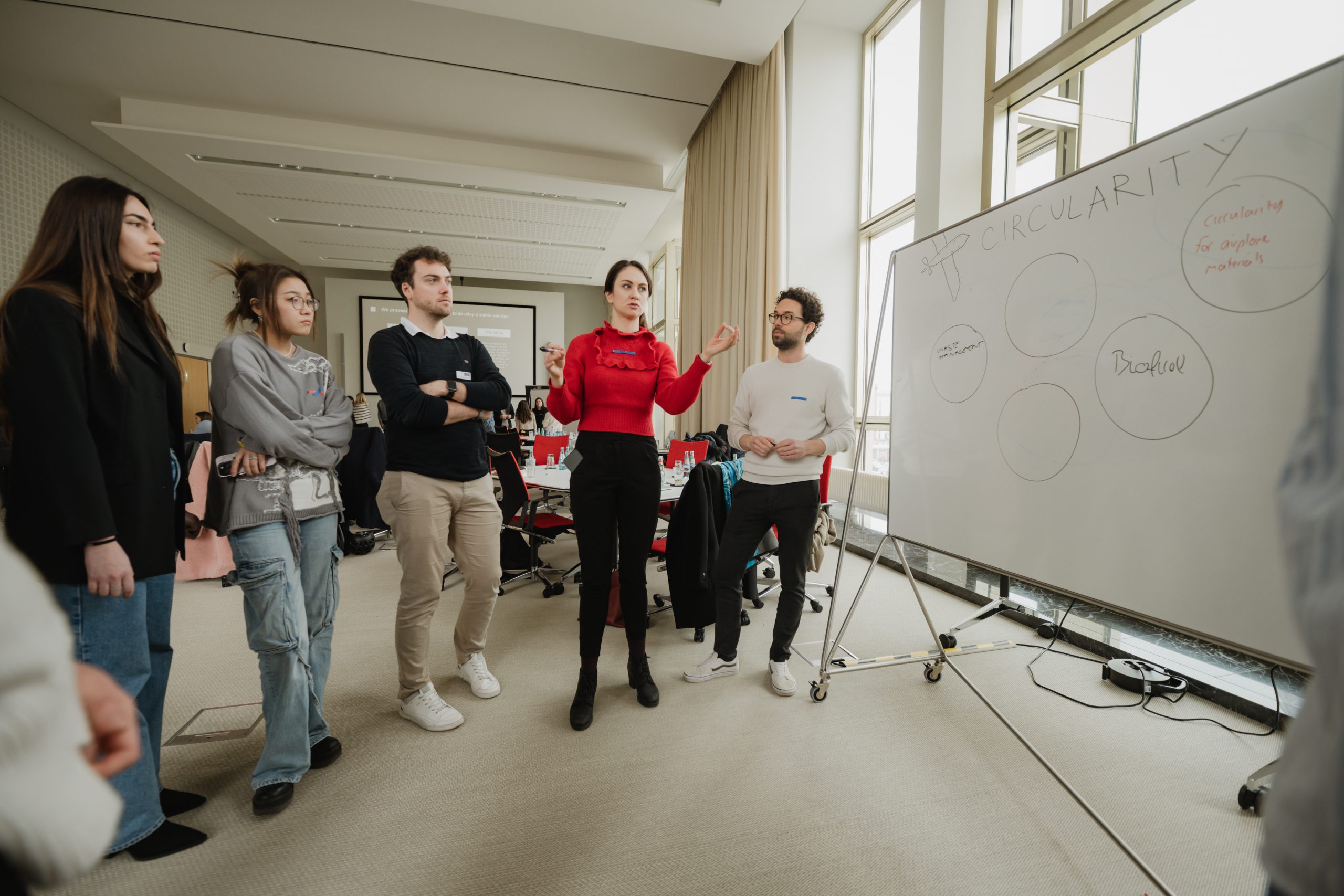
At ESMT, the Master in Innovation and Entrepreneurship is built around this reality. The focus is not just on celebrating ideas, but on working through the full journey of turning them into value creating initiatives, from early exploration to scaling and implementation. Students engage in hands-on projects that force them to confront ambiguity rather than avoid it, across contexts such as sustainability, corporate innovation, deep tech, and social impact.
Two flexible paths allow students to focus on startup entrepreneurship, corporate innovation, or a combination of both, reflecting the fact that goals evolve as people learn more about themselves and the environments in which they want to work. This flexibility is not about keeping options open for their own sake. It is about building transferable skills that remain relevant as circumstances change.
Faculty research actively contributes to understanding
Learning in this context is shaped by discovery and reflection. Students are encouraged to think differently, question assumptions, and develop their own approach rather than adopting a single model of what innovation should look like. Faculty play a central role here, not as distant experts, but as active contributors to the fields they teach.
Professors such as Linus Dahlander, whose work explores open and distributed innovation, Angeliki Papachroni, who studies strategy and innovation within organizations, and Mehir Sevilir, whose research examines entrepreneurship, leadership, and growth through mergers and acquisitions, bring research into the classroom in ways that connect directly to real challenges. Their work helps students see how innovation unfolds inside organizations, across markets, and over time.
Peer-to-peer learning helps students explore cross-cultural innovation
Equally important is the learning that happens among peers. Working with classmates from many countries and backgrounds exposes students to different ways of thinking about risk, collaboration, and impact. This diversity shapes how individuals approach problem solving and prepares them for working across borders and cultures, a reality for many innovators and entrepreneurs today.
Doing innovation through practice
Practice remains essential to doing innovation and entrepreneurship, not just learning about it. Through institutions such as Vali Berlin and the Institute for Deep Tech Innovation, as well as internships and consulting projects with corporate partners, students work on real challenges with real constraints. These applied experiences move learning beyond the classroom and into environments where decisions matter and tradeoffs are unavoidable.
The takeaway: approach uncertainty with curiosity
What emerges from this combination of reflection, practice, and exposure is not a fixed toolkit, but a mindset. A way of approaching uncertainty with curiosity rather than fear. A willingness to learn from evidence rather than defend assumptions. An understanding that entrepreneurship and innovation are not about finding the right answer once, but about making a series of thoughtful decisions over time.
This mindset matters whether you are building a venture, driving change inside an organization, or supporting others as part of an entrepreneurial ecosystem. It travels across sectors and borders. And it becomes stronger when developed deliberately, in environments that challenge you to think, act, and reflect at the same time.
Turning ideas into something that lasts is demanding work. Learning how to do it well is what makes the difference.
Scholarship opportunities
Finally, here is your chance to become part of this. There are several interesting Master programs to choose from and ESMT offers unique scholarship opportunities, especially for young African founders. Check out this list to see which one best suits you and save up to 95% of your tuition fees